Stepping into the digital world can feel incredibly overwhelming for any business owner. When you hear terms like servers, source code, DNS configuration, and bandwidth, it is completely normal to feel like you are trying to learn an entirely new language. However, building a digital home for your brand does not have to be a confusing, stressful ordeal. At its core, owning a website is very much like building a physical brick-and-mortar storefront in the real world.
Whether you want to launch a simple informational landing page or a massive digital marketplace, the journey follows a clear, structured roadmap. By breaking the process down into its fundamental building blocks, you can approach your next development project with complete confidence. Let us take a detailed, plain-English journey through all the vital aspects of owning a website, from your initial idea to the final launch day.
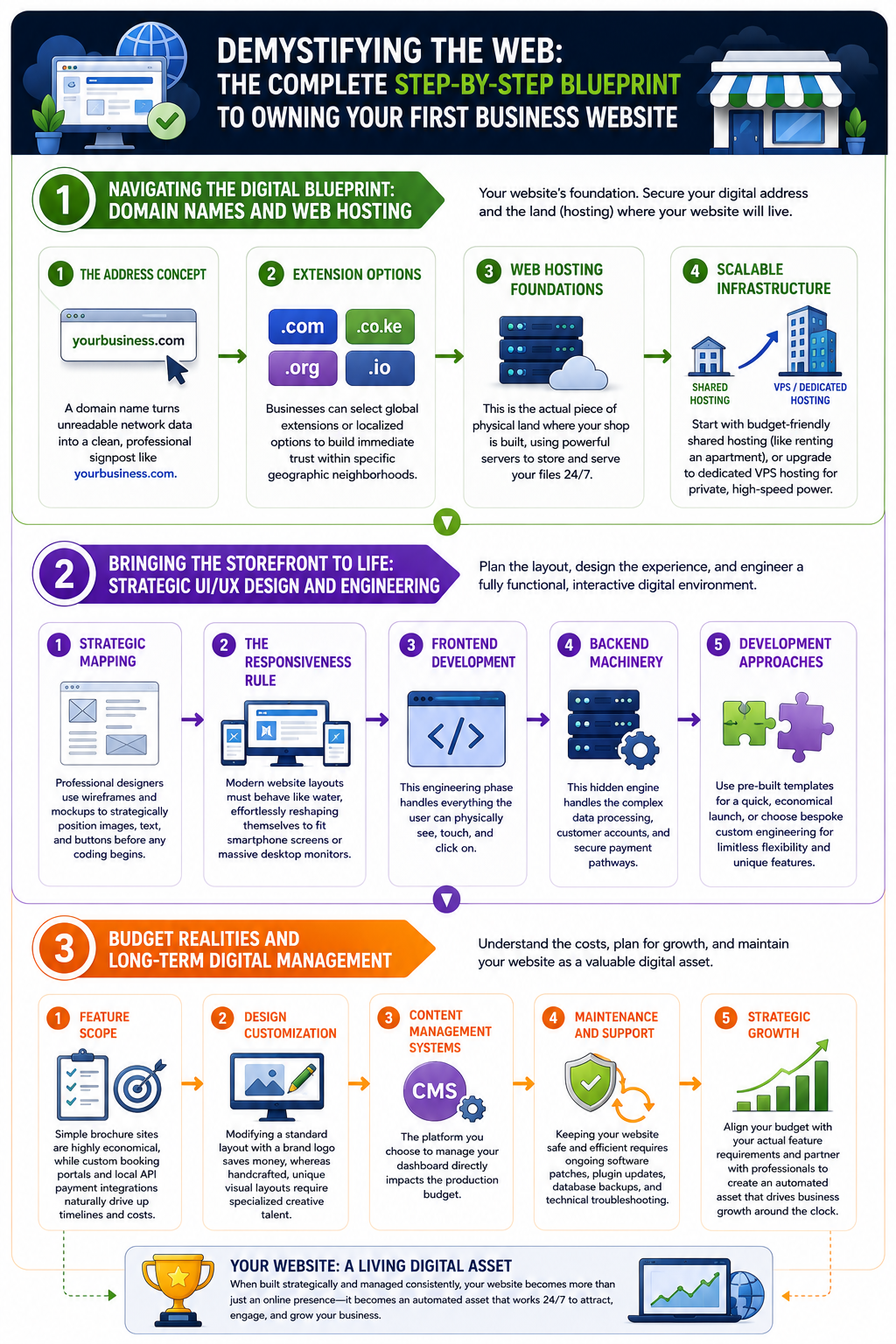
1. The Domain Name: Your Digital Street Address
Before you can build a house, you need an address so people can find you, and that is exactly what a domain name does for your business online. It is the unique text that users type into their browsers to arrive at your digital doorstep.
Think of a domain name as your official digital signpost, turning a complex, unreadable string of computer network numbers into something clean and memorable like yourbusiness.com.
You can opt for global extensions like dot-com or choose a localized extension to instantly build trust with a specific audience, signaling that you operate right in their neighborhood.
Domain names are not purchased permanently; they are leased from verified registrars on an annual basis, requiring timely renewals to ensure nobody else snaps up your brand identity.
2. Web Hosting: The Land Your Shop Stands On
If your domain name is the address on a business card, web hosting is the actual piece of physical land where your storefront is constructed. It is the engine room that keeps your website visible to the world twenty-four hours a day.
A web host is a highly specialized, ultra-powerful computer, known as a server, that securely stores all your website files, images, texts, and databases, serving them up instantly whenever a visitor types in your address.
Shared Hosting:This is the equivalent of renting an apartment in a large building, where you share resources like water and electricity with neighbors, making it incredibly affordable for new websites with lower traffic.
Dedicated and VPS Hosting:This is the equivalent of owning a private commercial complex, giving you exclusive access to all server resources, which guarantees lightning-fast loading speeds and maximum security for large-scale operations.
3. UI/UX Design: Designing the Interior and Store Layout
Once you have the land and the address, you need to plan how your store looks, feels, and operates. This phase is all about the user experience (UX) and user interface (UI) design, ensuring your site is both beautiful and functional.
Design is not just about choosing pretty colors; it is the strategic blueprint that maps out how a visitor moves through your pages, making sure they can find what they need without getting lost.
Wireframing and Mockups: Before a single line of code is written, a professional designer creates visual layouts, allowing you to see exactly where images, text blocks, and contact buttons will sit on desktop and mobile screens.
The Responsiveness Rule: A great modern design must act like water, effortlessly reshaping itself to look flawless whether it is being viewed on a massive office monitor or a tiny smartphone screen while someone is on the move.
4. Web Development: Laying the Bricks and Connecting Utilities
Web development is where the static design blueprints come to life. This is the engineering phase, where programmers turn visual layouts into fully interactive, functional digital environments.
Development is divided into two parts, the frontend, which is everything the user sees and clicks on, and the backend, which is the hidden machinery handling data, payments, and user accounts.
The Template Approach: Utilizing pre-built structures can get you online quickly and easily, offering a great starting point for standard informational blogs and small portfolios.
Bespoke Custom Engineering: Building from scratch with pure, custom code offers limitless flexibility, giving you high-performance architecture, unique features, and clean code tailored exactly to your unique workflows.
5. Cost Determinants: What Drives the Price Tag?
One of the most frequent questions clients ask is why web project quotes vary so wildly in the market. The truth is that website pricing is modular, depending entirely on the scale, complexity, and specific demands of your business goal.
The Scope of Features: A simple five-page brochure website requires significantly less time and labor than a complex digital system featuring custom booking portals, multi-vendor carts, or local API payment integrations.
Design Customization: Choosing a standard layout modified with your logo is highly economical, while commissioning a completely unique, handcrafted visual layout requires specialized creative expertise.
Content Management Systems: The tools you choose to manage your site, whether you want an easy drag-and-drop dashboard or a highly secure, engineered custom administration panel, will naturally shift production timelines and resource investments.
Maintenance and Support: A website is a living digital asset that requires regular software security patches, plugin updates, database backups, and technical troubleshooting to remain safe and efficient over time.
Embarking on a website project does not have to be a leap into the dark. By understanding that a successful site relies on a harmonious mix of a great address, strong hosting, beautiful design, and solid development engineering, you can make highly informed business decisions.
Treat your business website as an ongoing investment rather than a one-time expense. When you align your budget with your actual feature requirements and partner with an experienced development team, your website transforms from a simple digital business card into a powerful, automated asset that drives growth around the clock.